
Electrical Equipment and Installations Laboratory

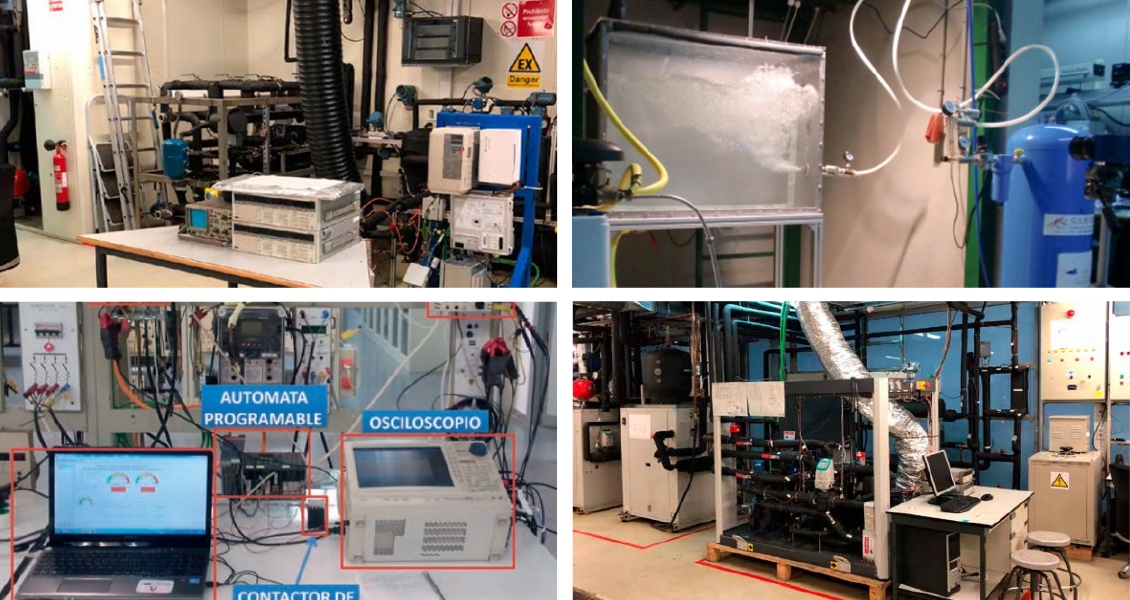
The area of Electrical Systems and Equipment has more than 200 m² dedicated to research and teaching laboratories for performing various tests on rotating electrical machines, transformers, and other components of electrical installations, including their automation, connectivity, and both local and remote data acquisition.

The laboratory is equipped with a wide range of power‑supply units, measurement devices, and automation systems that allow the configuration of automated test benches on demand. The facilities are also prepared for testing equipment under fault conditions and for intentionally inducing typical faults found in electrical machines.
Wind Turbines

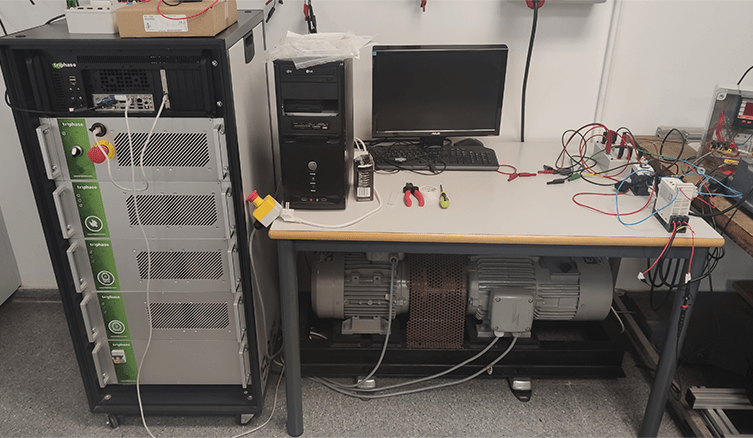
Configurable Test Bench for Doubly‑Fed Induction Machines and Induction Machines (Triphase)

  • Fully software‑configurable equipment for implementing different control structures
  • Doubly‑fed induction machines (typical in wind‑power generation) and squirrel‑cage induction machines
  • Bidirectional 4.5 kW power rating with minimal energy consumption (losses only)
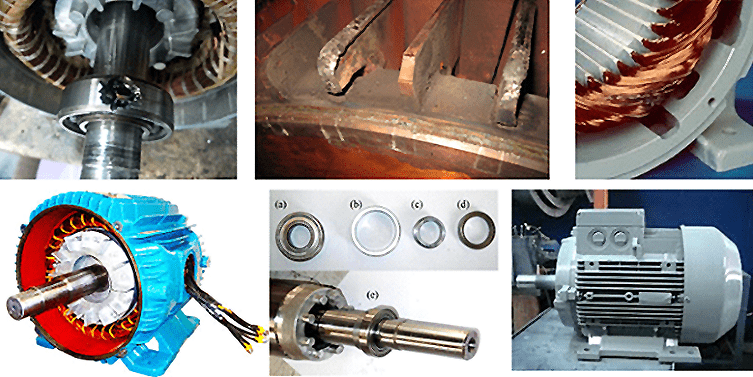
    Capability to artificially introduce faults of different severity levels

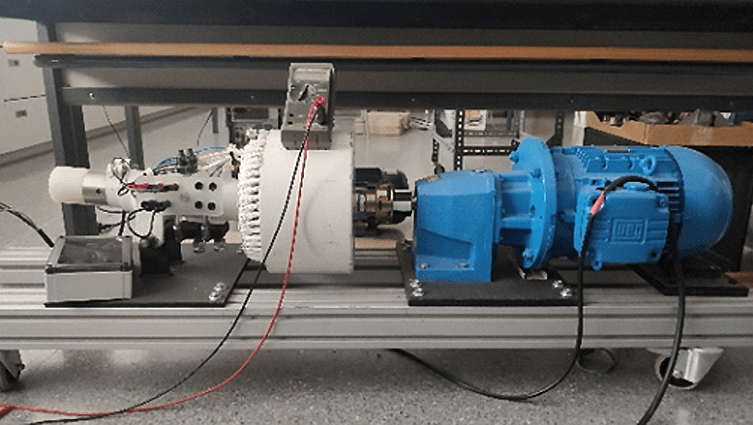
Test Bench for Permanent‑Magnet Synchronous Machines (Bornay)

  • Permanent‑magnet synchronous machines (typical of wind‑power generation)
  • Bidirectional 3.3 kW power rating with grid‑injection capability
  • Ability to artificially introduce faults of varying severity
Real‑Time Simulators

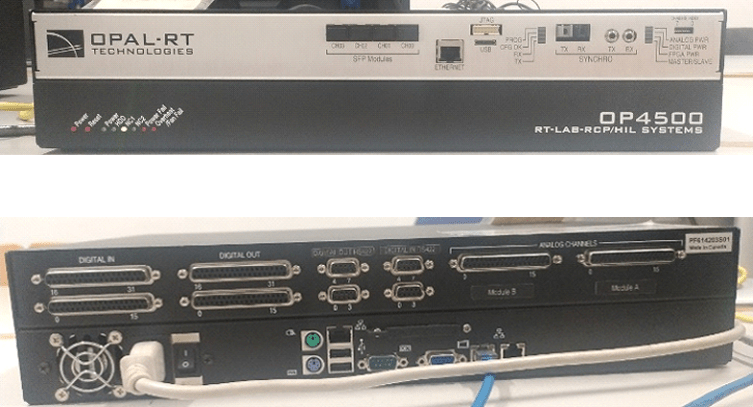
Hardware‑in‑the‑Loop Simulator — Model: HIL OP4500

Enables rapid prototyping of equipment and real‑time simulation of models applied to electrical machines and their control systems, electrical networks, systems, and electrical equipment.

Drives

Electrical Machine Test Benches

Electrical machines with different types and severities of faults, enabling the development and validation of diagnostic techniques.

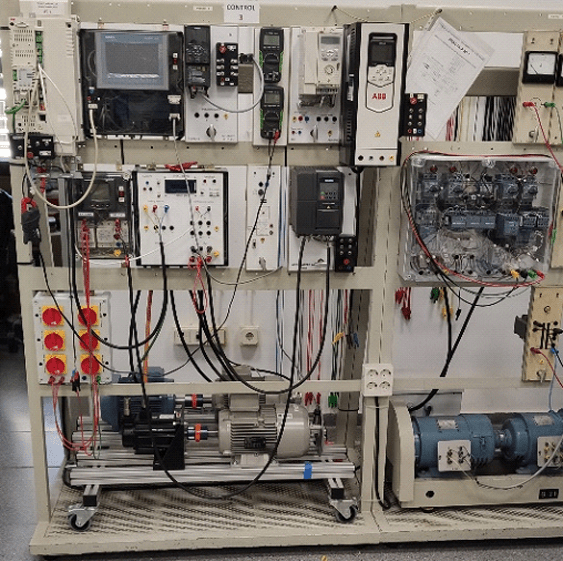
Test benches for electric drives

Electric drives for the control of electrical machines, enabling studies, testing, and validation of different types of electrical machines. This includes energy efficiency assessments, thermal behaviour analysis, and the determination of load curves, among other evaluations.

Automation and control of electrical installations

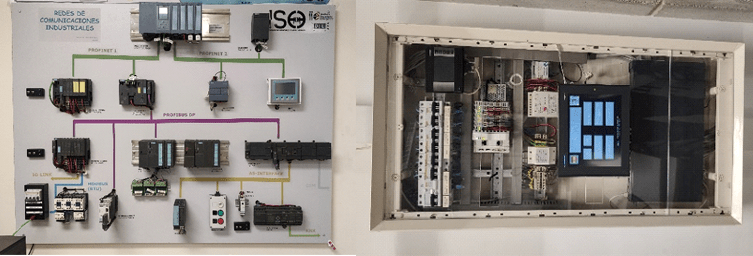
We have facilities dedicated to industrial automation, where different control strategies and configurations can be tested:

  • Various industrial controllers or programmable logic controllers (PLCs) — featuring a wide range of CPUs, I/O modules, and communication options — from the most widely used brands worldwide: Siemens, ABB, Omron, B&R, Beckhoff, Telemecanique, Festo.
  • Human–Machine Interfaces (HMIs) from different brands, models, and sizes, as well as both commercial and customized SCADA systems.
  • Industrial communications.
  • IoT connectivity.
  • Integration of electrical equipment, such as frequency converters, intelligent power contactors, network analyzers, etc.
Measurement Equipment

We have equipment capable of measuring and acquiring various electrical variables, including voltage, current, and power.

We also have dedicated sensors for measuring speed, torque, temperature, vibrations, and other parameters.

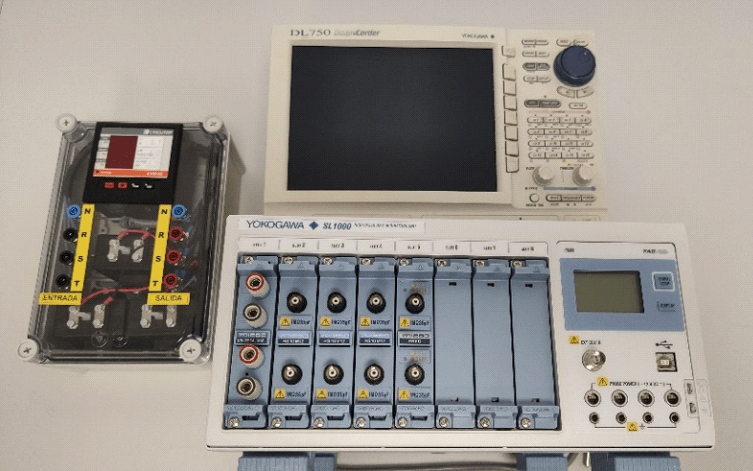
Additionally, the laboratory is equipped with oscilloscopes, analyzers, data loggers, and similar instruments.

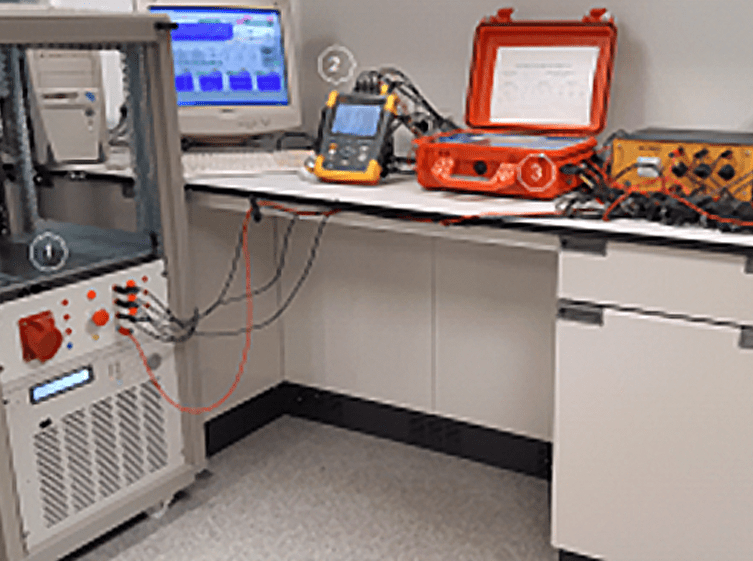
  • CHROMA 61704 Programmable Three‑Phase Switching Power Supply, 0–300 V, 15–1.2 kHz and 6000 VA, with GPIB (NIST and NML certified).
  • FLUKE 435 Energy Efficiency and Power Quality Analyzer.
  • SIMPELEC® Energy Efficiency Analyzer, based on the Unified Theory of Electric Power (UPM), developed by the group itself under a registered invention patent.
  • De Lorenzo Resistive Load Bank, three‑phase with 7 steps up to 1200 W each.

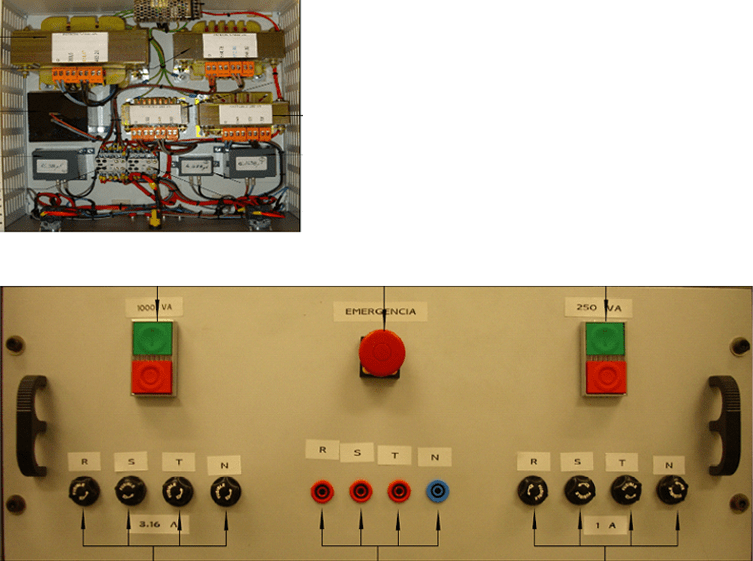
We have Physical Reference Standards for Unbalance Power Measurement, developed under invention patent P200701224, capable of generating pure unbalance conditions—without any other associated phenomena—for a defined value.

The available power steps, both active and reactive, are 250 VA and 1000 VA

A prototype of an Unbalance Power Compensator is available, consisting of one active and one reactive step of a passive compensator for unbalance power. It is designed for a 400 W public lighting luminaire.